Cloud 9
A scalable travel planning product designed to reduce friction and elevate the planning experience.
Problem
Travel planning is too overwhelming, when booking flights, hotels, and activities
Travelers often feel frustrated by complex interfaces, lack of personalized recommendations, and the inconsistency between different apps.
Research
Finding a way to achieve a full unified experience...
Multiple studies and reports reveal common frustrations within the most popular travel industry apps
A McKinsey report (2021) on consumer travel trends highlighted that personalization is one of the most desired features in modern travel apps, yet only 23% of travelers report receiving relevant suggestions.
The 2020 Travel Technology Report by Phocuswright revealed that 61% of travelers cited the need for a more unified experience, where all aspects of their journey could be planned and booked in one app.
Research on accessibility in mobile apps shows that 15% of the global population lives with some form of disability, yet many travel apps fail to meet accessibility standards (World Health Organization, 2022).
The competition has TOO MUCH fragmentation
While keeping the goal of a unified experience while booking travel, I analyzed 4 of the top apps in the travel booking industry (Expedia, Google, Kayak, and Trip Advisor). I found that all of them had too much fragmentation in their app. This then became my opportunity to create the solution.
RESEARCH QUESTIONS
What aspects of the travel booking process do you find most frustrating?
How many different apps or websites do you typically use when planning a trip? What do you use them for?
What features do you feel are missing from current travel apps or websites that would make booking easier for you?
When booking travel for yourself or your family, how important is personalization?
Have you ever encountered accessibility issues (e.g., screen reader compatibility, ease of use for people with disabilities) when using travel apps or websites?
How do you feel about the process of booking multiple aspects of your trip across different platforms?
What would make you more likely to use a single app to manage all aspects of your travel experience, from planning to booking?
USER INTERVIEWS
My interviewees were 3x more satisfied when booking their travel
Through my research, I found that the most common frustration among travelers was the lack of a unified experience across travel platforms. I conducted 10 interviews with parents, students, and frequent travelers. During these interviews, I asked participants about their dissatisfaction with current booking systems and what improvements they would like to see. I then organized my collected data through journey mapping to identify pain points and opportunities for enhancement.
Approach
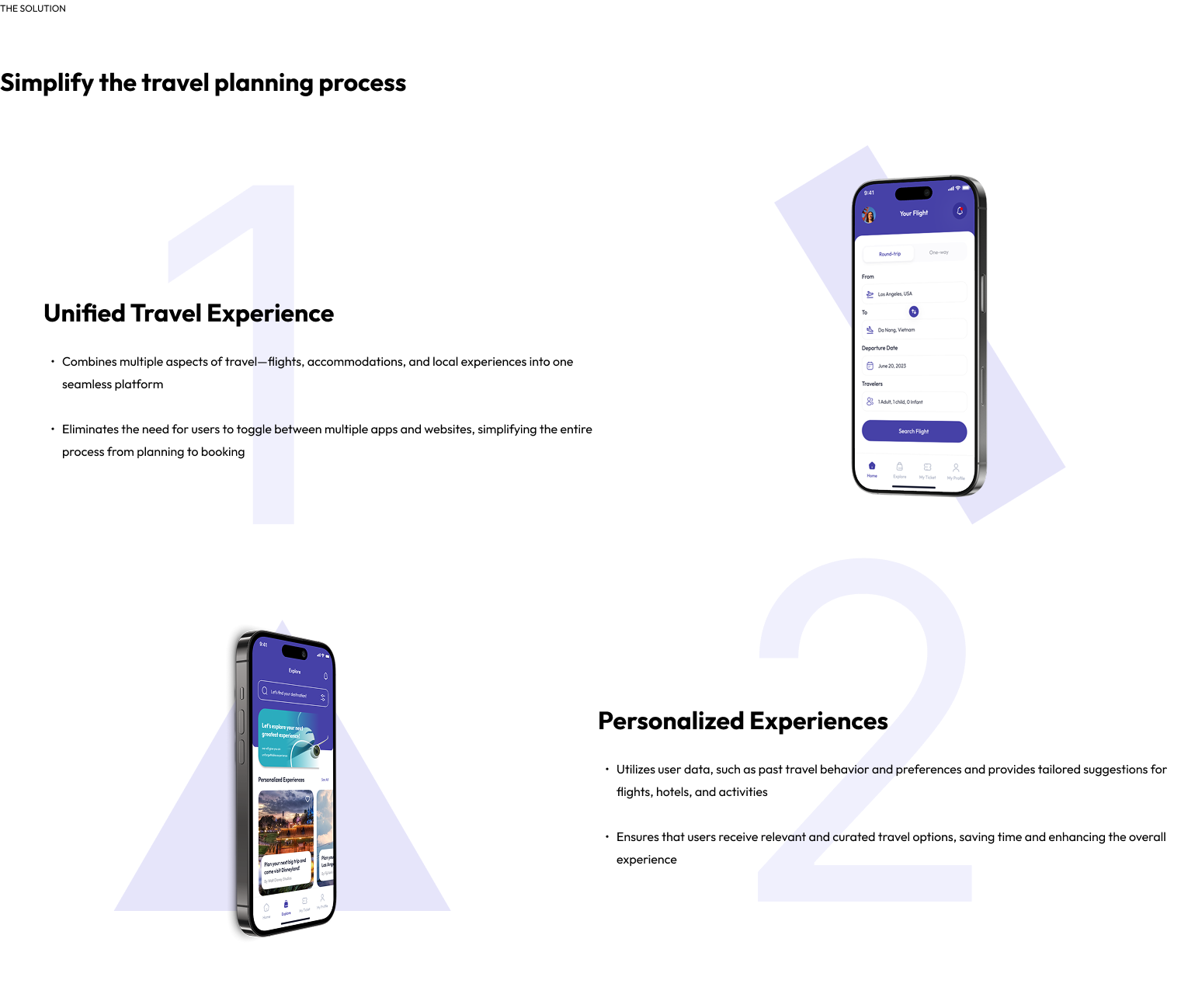
Primary Designs
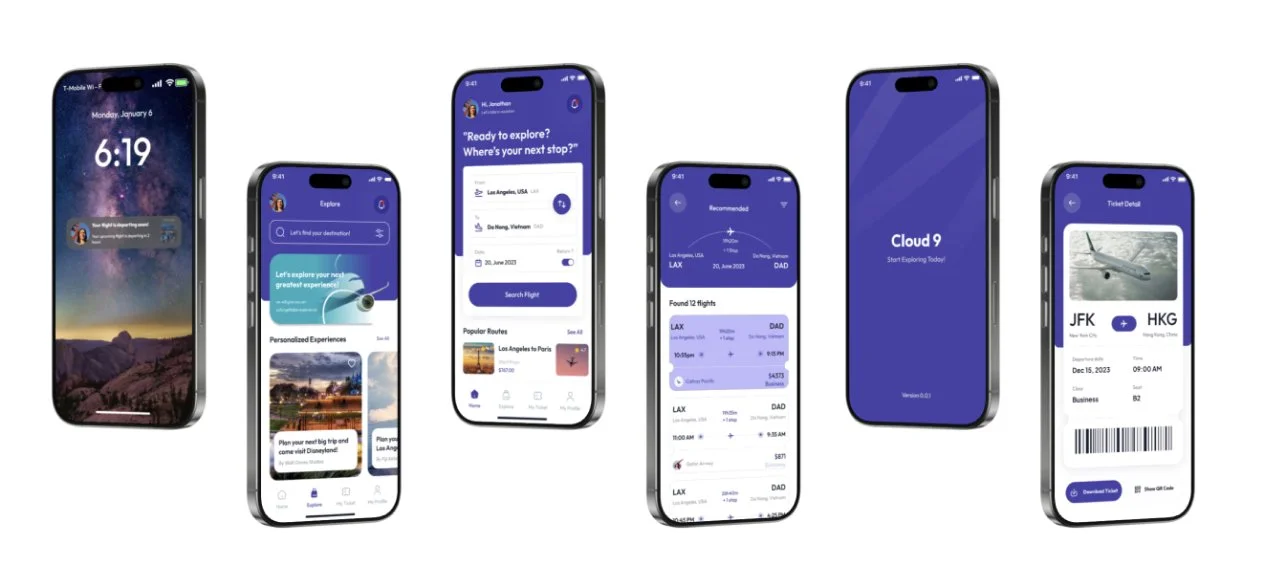
Prototype
Conclusions & Reflection
My final thoughts:
This was my first every UX Project! Although it took me a lot of learning and research I was so excited to fianlly take my first steps through the UX process.
Here are a few things that I learned:
The Importance of Personalization: I discovered how crucial it is to offer personalized recommendations and services that align with the user’s preferences and past behavior. Tailoring the experience makes the app feel more relevant and engaging, encouraging continued use.
User-Centered Design is Essential: Listening to user feedback and prioritizing pain points, like the need for a unified experience and flexibility, helped me design an app that solves real problems. This process reinforced how important it is to focus on the user journey and keep them at the center of the design.
Balancing Simplicity with Features: I learned that while it’s important to include a range of useful features, keeping the interface simple and intuitive is key to a positive user experience. Overloading the app with too many options can lead to confusion and frustration.
Accessibility Matters: Ensuring that the app is accessible to all users, including those with disabilities, was a significant takeaway. By implementing features like voice commands and screen reader compatibility, I was able to design an app that’s inclusive and user-friendly for a wider audience.
Iterative Design is Key: The design process taught me the importance of iteration. Testing early and often, and refining based on feedback, allowed me to continuously improve the app and ensure it truly met the needs of users.